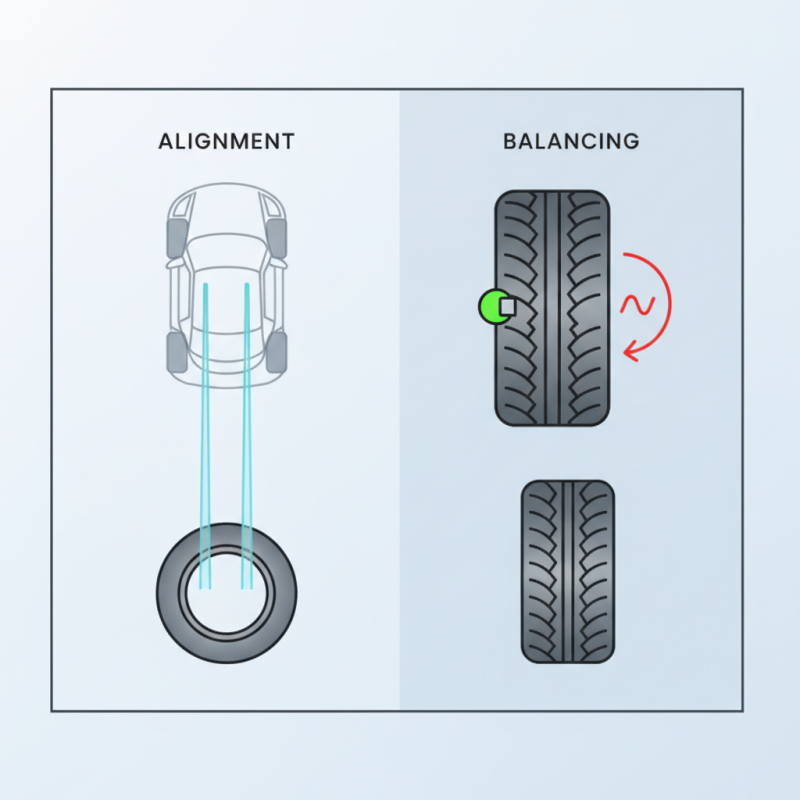
Understanding vehicle dynamics is essential for optimal performance. Many drivers wonder, “What is the difference between alignment and balancing?” Both terms relate to wheel adjustments but have distinct purposes. Proper alignment ensures that wheels point in the same direction. This improves handling and tire wear.
On the other hand, balancing addresses weight distribution on the wheels. An imbalanced wheel can cause vibrations and uneven tread wear. Regular maintenance checks can help identify these issues. Drivers often overlook this essential aspect. Consistency in maintenance is key to vehicle lifespan.
Being aware of these differences can enhance driving safety. Correctly aligned and balanced wheels contribute to a smoother ride. Engaging with professionals can provide clarity on these concepts. A little knowledge can lead to significant improvements in vehicle performance.
Understanding the Concept of Alignment in Mechanical Systems
Understanding alignment in mechanical systems is crucial for optimal performance. Alignment refers to the positioning of machine parts in relation to one another. When machines are properly aligned, they operate more efficiently, reducing wear and tear. According to industry reports, misalignment can lead to a 30% increase in energy consumption. This waste not only raises costs but may also shorten the lifespan of equipment.
Precision in alignment is vital for various applications. A 2021 study revealed that nearly 50% of rotating equipment failures result from misalignment. For example, in pump systems, improper alignment may disrupt fluid flow, causing cavitation and pump damage. Regular maintenance checks can identify alignment issues early, preventing costly repairs and downtime. However, many organizations underestimate the importance of alignment.
Real-world examples show varying results in alignment practices. Some companies achieve 90% alignment accuracy with proper tools and training. Others lag, seeing only 70% success. The reasons vary—lack of technology, insufficient training, or outdated processes. This inconsistency emphasizes the need for continuous evaluation and improvement in alignment strategies. Balancing efforts within systems must address alignment issues first for overall reliability.
Key Principles of Balancing and Their Importance in Engineering
Balancing is a fundamental concept in engineering that ensures machines and structures operate efficiently. It involves the distribution of mass around a central axis. When parts are unbalanced, vibrations can occur, leading to wear and damage. Engineers strive to achieve perfect balance. However, achieving complete balance is often impractical. Minor imbalances regularly arise, necessitating continuous adjustment.
Key principles of balancing focus on mass distribution and rotation speed. Engineers analyze components to ensure they remain stable during operation. Even slight deviations can impact efficiency and safety. Understanding the right balance improves system performance and increases lifespan. Accurate measurements are essential. Many times, engineers need to go back and tweak designs for better results. Details matter in balancing. Small errors can lead to significant problems.
In engineering, there's a fine line between alignment and balancing. Alignment focuses on proper positioning, while balancing deals with mass distribution. Misunderstanding these concepts can lead to costly mistakes. For instance, an imbalanced rotor can become a safety hazard. Engineers must constantly revisit their designs to maintain balance and alignment. Each project is a learning opportunity, reflecting the importance of adapting to new challenges.
Differences Between Static and Dynamic Balancing Explained
When discussing balancing in mechanical systems, understanding the difference between static and dynamic balancing is essential. Static balancing refers to the condition where an object remains at rest in a horizontal position. In static balance, the center of mass must align with the support point directly beneath it. A simple example is a seesaw perfectly balanced with equal weights on either side.
Dynamic balancing, however, comes into play during motion. It involves maintaining balance while an object rotates or moves. An unbalanced wheel can cause vibrations when it spins, leading to inefficiency and potential safety issues. This scenario requires precise placement of weights to counteract the forces at work during movement. Achieving dynamic balance often proves more challenging than achieving static balance.
Both types of balancing affect performance in significant ways. A lack of proper static balance can lead to failures in machinery, while poor dynamic balance may lead to excessive wear and tear. Each scenario needs careful consideration and adjustment, highlighting the importance of understanding the basic principles of both balancing types. Knowing when to apply each type can prevent costly mistakes and ensure smoother operation.
2026 How to Understand the Difference Between Alignment and Balancing? - Differences Between Static and Dynamic Balancing Explained
| Dimension |
Static Balancing |
Dynamic Balancing |
| Definition |
Achieving balance in a stationary state |
Achieving balance in motion |
| Applications |
Fixed parts such as shafts |
Rotating components like wheels or rotors |
| Measurement Method |
Using weights or scales to check weight distribution |
Vibration analysis during operation |
| Key Focus |
Weight distribution without movement |
Weight distribution while in motion |
| Typical Challenges |
Finding the exact weight to balance |
Complexities due to centrifugal forces |
| Outcome of Imbalance |
Stable in fixed position, but may move if external forces applied |
Vibration and potential damage during operation |
Case Studies: Alignment vs. Balancing in Real-World Applications
When examining the concepts of alignment and balancing in various industries, real-world applications reveal much about their distinct roles.
Alignment focuses on ensuring that all elements—people, processes, and technology—work towards a common goal. A recent industry report indicated that
70% of organizations struggle with alignment, leading to reduced efficiency. A case study in manufacturing highlighted how poor alignment between teams
caused delays and waste. Communication gaps were the primary issue.
On the other hand, balancing aims for equilibrium among different priorities or resources. For example, within project management, balancing scope, time, and cost is crucial.
A survey found that 60% of project managers identified balancing these elements as a significant challenge.
An IT deployment case revealed that prioritizing cost over time led to quality issues. This imbalance created setbacks in the overall project timeline, demonstrating the importance of maintaining a delicate balance.
Both concepts are vital for organizational success. However, many companies struggle to implement them effectively. For instance, an analysis of employee feedback found that
55% felt their organizations failed to achieve proper alignment. This gap often stems from leadership not communicating goals clearly.
In contrast, balancing remains equally challenging, often requiring constant adjustment and reflection. Continuously evaluating the balance can lead to better resource allocation and ultimately,
project success.
Industry Standards and Metrics for Measuring Alignment and Balancing
When exploring alignment and balancing, understanding industry standards is crucial. Alignment focuses on precise positioning, while balancing involves distributing weight evenly. According to a recent study by the Precision Measurement Association, nearly 70% of operational downtime results from misalignment or improper balancing.
Metrics are key in assessing alignment and balancing effectiveness. The shaft alignment tolerance standard is typically set within 0.001 inches. Achieving this precision mitigates wear and enhances machinery lifespan. Conversely, balancing can be quantified through vibration analysis. Data shows that a mere 10% imbalance can lead to a 50% reduction in equipment life.
However, many industries still struggle with these concepts. Surveys reveal only 35% of companies regularly monitor alignment and balancing. This lack of attention often leads to unforeseen maintenance costs. Moreover, even within organizations that track these metrics, 18% reported discrepancies in measurement accuracy. Hence, continuous improvement and education are vital for optimal performance.
FAQS
: Alignment refers to the positioning of machine parts relative to one another for efficient operation.
Proper alignment reduces wear and tear, lowers energy consumption, and extends equipment lifespan.
Misalignment can increase energy costs by 30% and lead to equipment failures and downtime.
Regular maintenance checks are essential to identify alignment problems early and avoid costly repairs.
Alignment focuses on positioning machine parts, while balancing involves the distribution of mass around a central axis.
Proper balancing prevents vibrations that can cause damage, enhancing machine efficiency and safety.
Shaft alignment typically has a tolerance of 0.001 inches for optimal performance.
Balancing effectiveness can be quantified through vibration analysis, assessing weight distribution and stability.
Surveys show only 35% of companies regularly check these metrics, highlighting a significant oversight.
Continuous evaluation, employee training, and adopting new technologies can enhance alignment and balancing outcomes.
Conclusion
The article "2026 How to Understand the Difference Between Alignment and Balancing" delves into the essential concepts of alignment and balancing in mechanical systems, highlighting their critical roles in engineering. What is the difference between alignment and balancing? Alignment refers to the accurate positioning of machine components to ensure optimal operation, while balancing focuses on redistributing mass to minimize vibrations and enhance stability. Understanding these differences is vital for effective machinery performance and longevity.
The piece further explores the key principles of balancing, the significance of both static and dynamic balancing, and presents case studies that illustrate practical applications of these concepts. Additionally, industry standards and metrics for measuring alignment and balancing are examined, providing readers with a comprehensive overview of how these processes impact engineering practices and machinery reliability.
 C-Max Tire