C-Max Tire
You cannot stop cold weather from lowering tire pressure, but you can manage its effects. A sharp overnight freeze may leave a tire looking slightly soft by morning. The change is often more noticeable after a vehicle sits outside for several hours. Why do cold temperatures drop tire pressure? Cold air takes up less space inside the tire, reducing the pressure measured by the valve-stem gauge. Tire pressure commonly decreases by about 1 psi for every 10°F temperature drop. However, this is only a practical estimate, not a guarantee. Tire size, starting pressure, altitude, and temperature changes can affect the result.
Low pressure can increase rolling resistance, reduce handling precision, and accelerate shoulder wear. It may also lower fuel efficiency. Do not rely on appearance alone. A tire can look normal while already being underinflated. The most reliable approach is simple: check pressure when the tires are cold, preferably before driving. Use the pressure listed on the driver’s doorjamb label, not the maximum number printed on the tire sidewall. Vehicle manufacturers and road-safety authorities, including the NHTSA, recommend regular pressure checks and proper maintenance. A portable gauge helps when temperatures fall suddenly. So does keeping one in the glove box. Inspect the tread and sidewalls for cracks, nails, or unusual bulges. If pressure drops repeatedly, cold weather may not be the only cause. A slow leak, damaged valve, or wheel problem could be responsible. This guide explains practical winter habits, while acknowledging one common mistake: adding air without checking the recommended pressure first.
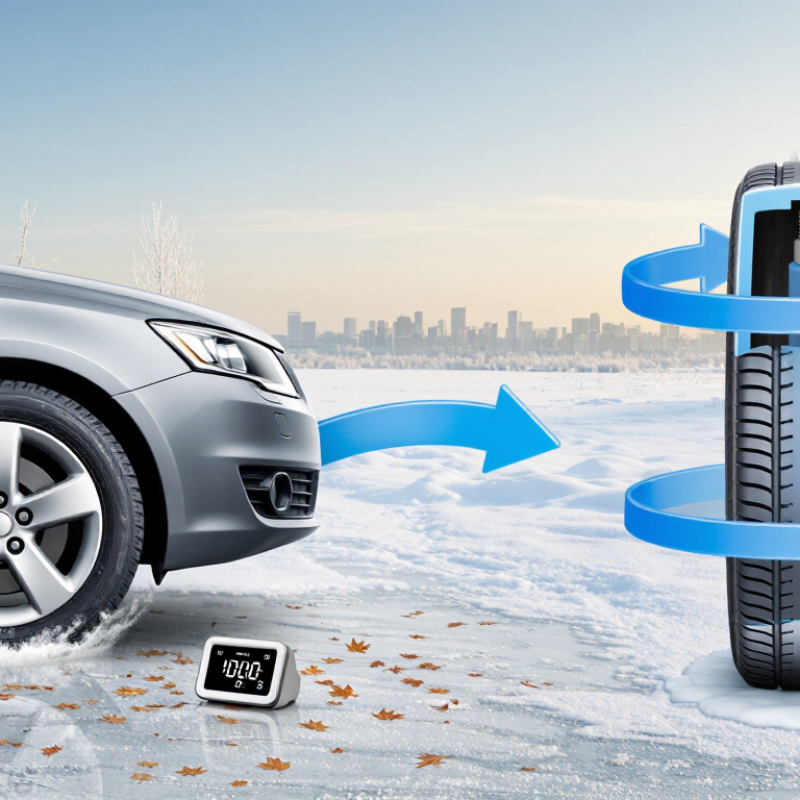
Cold air lowers tire pressure because air contracts as temperature falls. The tire has not necessarily lost air. The air simply occupies less space and pushes less strongly against the inner walls. A useful rule suggests a pressure change of about 1 psi for every 10°F drop. However, the exact change depends on tire construction, starting pressure, and outdoor conditions.
I notice this change most clearly after a vehicle sits outside overnight. The warning light may appear in the morning, then disappear after driving. That does not mean the pressure is safe. Warm tires gain pressure through friction, creating a misleading reading. Check all four tires when they are cold, preferably before driving. Use the pressure listed on the vehicle’s door label, not the maximum number molded into the sidewall. Measure with a reliable gauge. I once trusted one reading and regretted it.
Tips: Check tire pressure monthly and during sudden temperature drops. Inspect for nails, valve leaks, or visible damage if one tire loses pressure faster. Add air gradually, then measure again. Never release air from warm tires to match a cold reading. If the warning returns, ask a qualified technician to inspect the tire, wheel, and pressure sensor. Even a small pressure difference can affect braking, steering, tread wear, and fuel use.
How to Stop Cold Weather From Lowering Tire Pressure?
Cold weather does not remove air from a tire, but it reduces air pressure. A drop of about 10°F can lower pressure by roughly 1 psi. My first winter check showed this clearly. The same tires read lower on a freezing morning than they did in a warm garage. Always measure pressure when the tires are cold. Park for at least three hours, or check them before driving. Even a short trip can warm the tire and produce a misleading reading.
Tips: Use a reliable handheld gauge and press it firmly onto the valve. Check all four tires, including the spare if available. Compare the readings with the vehicle’s recommended pressure on the door-frame label or in the owner’s manual. Do not use the maximum pressure printed on the tire sidewall as your target. That number describes the tire’s limit, not the vehicle’s ideal setting.
Check pressure once a month and whenever temperatures change sharply. A dashboard warning can help, but it should not replace a manual check. I once trusted a warning system too long, and one tire was already several psi low. That was a useful reminder. Look for uneven tread wear, cracks, bulges, or a valve that leaks after checking. If pressure keeps falling, ask a qualified tire technician to inspect the tire, wheel, and valve.
| Topic | Typical Guidance or Example | Why It Matters | Recommended Action |
|---|---|---|---|
| Effect of falling temperature | Tire pressure commonly changes by about 1 psi for every 10°F (5.6°C) change in temperature. | Cold air contracts, reducing the pressure measured inside the tire. | Check pressure after major temperature changes instead of assuming the tire has a leak. |
| Example of a 20°F temperature drop | A tire set to 35 psi at 68°F (20°C) may read approximately 33 psi at 48°F (9°C). | The change is a practical estimate; actual readings vary with tire construction, sunlight, and measurement conditions. | Use the vehicle’s recommended cold inflation pressure as the target, not the previous day’s reading. |
| Correct reference pressure | The correct value is usually listed on the driver-side door-jamb label, inside the fuel door, or in the owner’s manual. | The recommended pressure is selected for the vehicle’s load, handling, braking, and tire size. | Do not use the maximum pressure printed on the tire sidewall as the normal vehicle setting. |
| Best time to measure | Measure when the vehicle has been parked for at least 3 hours, or before driving more than about 1 mile (1.6 km). | Driving creates heat that temporarily increases the pressure reading. | Check all tires, including the spare if it is fitted with a pressure-monitoring sensor. |
| Measurement location | Measure outdoors in the same conditions whenever possible, away from direct sunlight. | Sunlight and uneven heating can make one tire read higher than the others. | Compare tires only after they have been exposed to similar temperatures and conditions. |
| Gauge selection | A quality digital or calibrated mechanical gauge can provide consistent readings. | Damaged, inaccurate, or poorly stored gauges can create incorrect adjustments. | Check the gauge against another reliable gauge if readings seem unusual or inconsistent. |
| Adjusting low pressure | Inflate the tire to the vehicle manufacturer’s recommended cold pressure. | Driving with underinflated tires can increase rolling resistance, heat buildup, tread wear, and stopping distance. | Add air in small amounts, recheck the reading, and replace the valve cap securely. |
| Avoiding overinflation | Do not release air from a warm tire solely because its pressure appears higher. | Warm tires normally show higher pressure, and releasing air can leave them underinflated when cold. | Wait until the tires cool, then adjust them to the specified cold pressure. |
| Pressure-monitoring warning | A warning may appear after an overnight freeze even when no puncture is present. | The system detects pressure below its programmed threshold, not the reason for the pressure loss. | Manually check every tire before resetting or relying on the warning system. |
| Possible puncture or leak | A tire that repeatedly loses more than about 1–2 psi over several days may require inspection. | Temperature-related pressure changes are gradual and usually affect all tires similarly. | Inspect the tread, valve stem, wheel rim, and repair area; seek professional service for persistent loss. |
| Winter checking routine | Check pressure at least monthly and before long trips, with additional checks during severe cold snaps. | Seasonal temperature swings can produce repeated pressure changes. | Record the readings and inspect for uneven wear, visible damage, or unusual differences between tires. |
Note: The 1 psi per 10°F (5.6°C) guideline is an approximate rule for ordinary conditions. Always follow the vehicle manufacturer’s cold-tire pressure specification.
Cold air does not remove tire air, but it reduces pressure. The National Highway Traffic Safety Administration states that pressure may fall about 1 psi for every 10°F temperature drop. A tire filled to 35 psi during mild weather could lose several psi overnight. That difference matters on icy mornings.
Check pressure when the tires are cold. Park for at least three hours, or measure them before driving more than one mile. Use the pressure listed on the driver-side door placard, not the number molded into the tire sidewall. That sidewall figure shows the maximum permitted pressure, not the vehicle’s target. Adjust all four tires, including the spare when accessible. Small details count.
The U.S. Department of Energy reports that proper inflation can improve fuel economy by up to 3%.
Underinflated tires also flex more, create heat, and may respond poorly during sudden steering. A reliable gauge helps, although inexpensive gauges can disagree slightly. I still catch myself checking only the visibly softer tire, which is a mistake. Cold weather can lower all four equally. After inflation, replace the valve caps and recheck the readings within a few days. Tire pressure monitoring systems are useful warnings, but they may not identify a slow leak immediately. A pressure reading is evidence, not a guess.
Cold air does not create a leak, but it can expose one. The U.S. Department of Energy reports that tire pressure typically drops about 1 psi for every 10°F decrease. That change can make a weak seal easier to notice. Check pressures when tires are cold, ideally before driving. Compare each reading with the vehicle placard, not the maximum pressure printed on the sidewall.
Inspect the valve stem for cracking, looseness, or a faint hiss. Run your fingers around the rim edge, watching for mud, corrosion, or a small bent section. Examine both sidewalls carefully. Look for bulges, cuts, exposed cords, and shallow cracks caused by cold weather or aging rubber. The National Highway Traffic Safety Administration recommends monthly pressure checks and inspections before long trips. I have learned that a visual check can miss a slow leak. So, do not trust appearance alone.
Tips: Use soapy water around the valve and bead. Growing bubbles suggest escaping air. Mark the pressure and recheck it the next morning. A repeated loss needs professional inspection. Do not simply add air forever. Tire Industry Association training materials stress checking tread, sidewalls, and inflation condition together. A small puncture may hide beneath road grime. Clean the area first. Photograph unusual damage before driving further, because memory is less reliable than evidence.
Inspecting Tires for Leaks and Weather-Related Damage
What the chart shows: Tire pressure typically changes by about 1 psi for every 10°F change in temperature. This estimate uses a tire inflated to 35 psi at 68°F and illustrates why pressure may appear lower during cold weather.
Check tire pressure when the tires are cold, inflate them to the vehicle manufacturer's recommended level, and inspect the tread, sidewalls, valve stems, and wheel edges for punctures, cracks, or slow leaks. Temperature-related pressure changes are normal, but significant or repeated pressure loss may indicate damage or a leak.
Maintaining proper tire pressure throughout winter starts with understanding cold air. Pressure can drop about 1 psi for every 10°F decrease in temperature. That change may seem small, but it affects braking, steering, fuel use, and tread wear. Cold air matters. Check your tires before driving, preferably after the vehicle sits overnight. Use the pressure listed in the owner’s manual or door-frame label, not the maximum number printed on the tire. A calibrated gauge gives more dependable results than guessing by appearance.
Tips: Check all four tires and the spare once a month. Do it cold. Add air gradually, then measure again. Inspect the tread for uneven wear, embedded objects, or visible damage. A slow leak may become obvious during a freezing week. If the warning light returns after inflation, ask a qualified tire professional to inspect the valve, wheel, and tire. Do not ignore it.
I once assumed a tire looked fine because its sidewall appeared firm. The gauge showed it was several psi low. That mistake reminded me that appearance is unreliable, especially in winter. Pressure changes can also follow a sudden warm spell, so recheck after major temperature swings. Keep a small gauge in the vehicle, but protect it from moisture and extreme cold. Proper pressure does not prevent every winter hazard, yet it gives the tires a more stable contact patch on cold, wet roads.
Cold air contracts inside the tire. It pushes less strongly against the tire walls. The tire may not have lost air.
Pressure may drop about 1 psi for every 10°F decrease. Actual changes vary with tire design and starting pressure. It is only a useful estimate.
Check all tires when they are cold. Park for at least three hours before measuring. Early morning works well.
Use the pressure on the vehicle’s door placard. Do not use the maximum number molded into the sidewall. That number is not the normal target.
Yes, driving warms the tires and temporarily raises pressure. The warning may disappear, but the tires can remain underinflated. Check them cold anyway.
No. Cold weather can lower all four tires similarly. Check the spare when it is accessible. I sometimes check only the soft-looking tire, and that is a mistake.
Inspect the valve stem, rim edge, tread, and sidewalls. Look for cracks, bulges, cuts, corrosion, or exposed cords. Use soapy water and watch for growing bubbles.
Add air temporarily, then measure again. Mark the pressure and recheck it the next morning. Repeated loss needs inspection by a qualified technician.
Yes, it can affect braking, steering, tread wear, and fuel use. Underinflated tires flex more and create extra heat. Small differences matter.
Cold weather can cause tire pressure to fall because the air inside the tires contracts as temperatures decrease. Why do cold temperatures drop tire pressure? For every significant temperature change, tire pressure may decline, affecting handling, fuel efficiency, braking, and tread wear. Drivers should check pressure with a reliable gauge when the tires are cold, ideally before driving or after the vehicle has been parked for several hours. Comparing the reading with the pressure recommended in the vehicle’s manual or doorjamb label helps ensure an accurate adjustment.
If pressure is low, add air gradually until it reaches the recommended level rather than relying on the number printed on the tire sidewall. During winter, inspect the tread, sidewalls, valve stems, and rims for punctures, cracks, or other weather-related damage. A tire that repeatedly loses air may have a leak and should be professionally examined. Checking tire pressure regularly throughout the season, especially after major temperature changes, helps maintain safer, smoother, and more efficient driving.
