 C-Max Tire
A bald tire is more than an aging piece of rubber. It is a shrinking safety margin between your vehicle and the road. In wet weather, shallow tread cannot move water away quickly. The steering wheel may feel light. Braking may also become unpredictable.
What happens if I drive on a bald tire? The vehicle can lose grip during braking, cornering, or sudden lane changes. A puddle may trigger hydroplaning before you recognize the danger. On a service inspection, the warning signs can look small: exposed wear bars, smooth grooves, cracks, or uneven shoulders. The risk is not small.
The National Highway Traffic Safety Administration estimates that tire-related problems contribute to about 11,000 crashes each year, based on its historical safety analysis. NHTSA also advises replacing tires when tread reaches 2/32 of an inch. The U.S. Tire Manufacturers Association supports this replacement threshold and recommends regular professional inspections. These figures do not make every bald tire failure predictable. That uncertainty matters. A tire can appear usable in a driveway, then fail under rain, heat, heavy loading, or emergency braking. Even a short trip may expose the weakness. One recent inspection can miss damage that develops later. Drivers should check tread depth, inflation pressure, sidewalls, and tire age before driving. If the tread is worn smooth or the cords are visible, the safest decision is replacement, not experimentation.
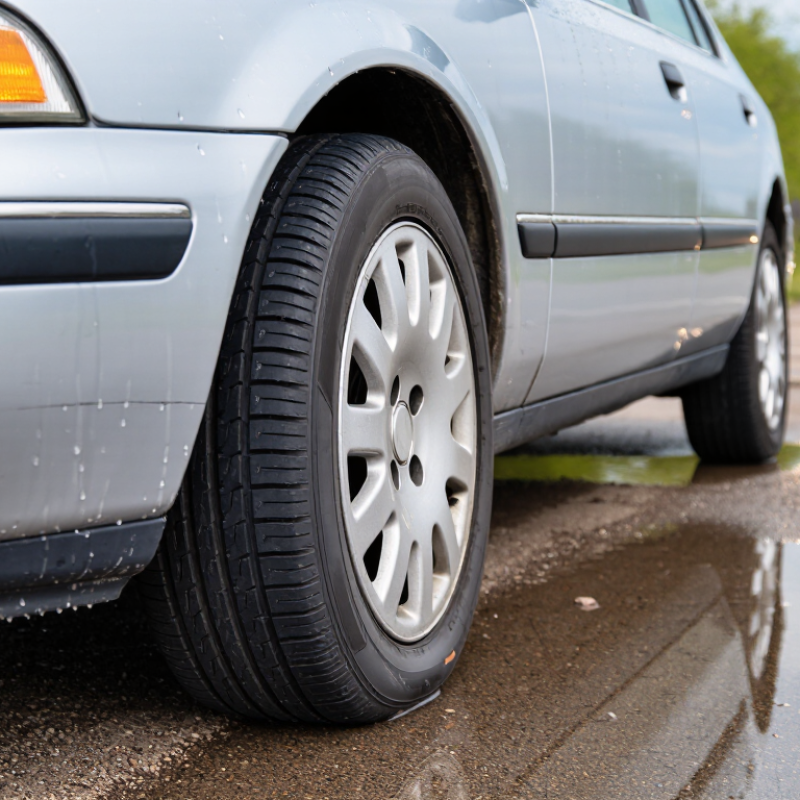
Top Dangers of Driving on a Bald Tire
Tread Depth: The 2/32-Inch Replacement Threshold
A tire becomes seriously compromised when its tread reaches 2/32 inch. That is only about 1.6 millimeters. The National Highway Traffic Safety Administration identifies this depth as the standard replacement point for worn passenger tires. Many tire safety guides use the same threshold. It is not a comfortable safety margin.
At 2/32 inch, the grooves have little room to move rainwater away from the contact patch. On a wet road, the car may feel light, wander during braking, or lose steering response. The risk becomes more noticeable near painted lines, puddles, and uneven pavement. Tread wear indicators can help, but they are easy to miss in poor light. A tread-depth gauge gives a clearer measurement.
Measure several points across each tire, not just the center. Uneven wear can leave one shoulder dangerously smooth while the middle appears acceptable. The U.S. Tire Manufacturers Association recommends replacing tires at or before the 2/32-inch level. Some professionals prefer earlier replacement when wet-weather traction matters, especially below 4/32 inch. That earlier point is not a universal legal rule, but it deserves attention.
Check them monthly.
Cold weather also reduces pressure and can expose existing damage. A tire can pass a quick driveway check yet perform poorly during an emergency stop. I sometimes treat the 2/32-inch mark as a finish line, but that view is too simple. Tire age, cracking, pressure, load, and road conditions also influence safety.
| Tread Depth | Approximate Metric Depth | Tire Condition | Primary Driving Risks | Recommended Action |
|---|---|---|---|---|
| 2/32 inch or less | 1.6 mm or less | Worn to the commonly recognized replacement threshold; tread-wear indicators may be level with the tread. | Severely reduced wet traction, increased hydroplaning risk, longer stopping distances, and reduced control in snow. | Replace the tire immediately. Avoid driving except to reach a qualified tire service location. |
| 3/32 inch | 2.4 mm | Very worn tread with limited reserve above the replacement threshold. | Poorer water evacuation and noticeably less grip during rain, slush, or emergency braking. | Plan replacement promptly, especially before wet-weather or winter driving. |
| 4/32 inch | 3.2 mm | Usable tread remains, but wet-weather performance is declining. | Reduced wet-road braking and less effective channeling of water through the tread grooves. | Monitor frequently and consider replacement before the tread reaches 2/32 inch. |
| 6/32 inch | 4.8 mm | Moderate tread depth with a useful margin above the replacement threshold. | Generally better wet traction than heavily worn tires, although performance depends on tire design, age, pressure, and road conditions. | Continue regular inspections and maintain the correct inflation pressure. |
| 8/32 inch or more | 6.4 mm or more | Relatively deep tread, assuming the tire is otherwise in good condition. | More tread capacity is available for water evacuation and traction, but deep tread cannot compensate for low pressure, damage, or excessive age. | Inspect monthly and before long trips; replace if cracks, bulges, punctures, or irregular wear are present. |
Replace it at 2/32 inch, or about 1.6 millimeters. That is the safety limit. Earlier replacement may help in frequent rain.
Shallow grooves cannot move enough water away. The vehicle may hydroplane, wander, or feel unusually light. Painted lines and puddles make this worse.
Use a tread-depth gauge instead of guessing. Measure several points across each tire. Check both shoulders and the center.
Yes. The sidewall may look fine while the center tread is thin. Uneven wear can hide a dangerously smooth shoulder. A quick glance is not enough.
Check them monthly and before long trips. Inspect them when cold. Remember the spare tire.
Look for cracks, bulges, repeated pressure loss, and uneven wear. Vibration or pulling also needs attention. These signs may indicate hidden damage.
No. It is a replacement threshold, not a promise of strong traction. Weather, tire age, pressure, load, and pavement still matter. I sometimes treat it as a finish line, but that is too simple.
Slow down safely and avoid sharp steering movements. Stop driving if the problem continues. Arrange a professional inspection before continuing.
Driving on a bald tire creates serious safety risks because worn tread can no longer provide reliable traction. What happens if I drive on a bald tire? Stopping distances can increase dramatically, especially on wet roads. At 60 mph, testing has shown that severely worn tires may require about 87 additional feet to stop compared with tires having adequate tread. Once the grooves become shallow or disappear, the tire also loses its ability to channel water away, increasing the danger of hydroplaning and sudden loss of control.
A bald tire is also more vulnerable to heat buildup, punctures, and structural damage. If the protective rubber wears away, weakened or exposed cords can contribute to a blowout, particularly during high-speed or long-distance driving. These failures can cause severe crashes, and tire-related incidents have been linked to 738 deaths recorded in 2017. As a general safety guideline, tires should be replaced when the tread reaches 2/32 of an inch, or sooner if cracking, bulges, uneven wear, or other damage is visible.
