C-Max Tire
What is the best tire pressure for fuel economy? This question is often asked by drivers looking to improve their vehicle’s efficiency. Expert Alex Johnson, a renowned automotive engineer, states, "Maintaining proper tire pressure can enhance fuel economy significantly." His insight reflects the crucial role tire pressure plays in vehicle performance.
Each vehicle has a recommended tire pressure listed inside the driver’s door. This number is essential for achieving optimal fuel efficiency. When tires are under-inflated, they create more rolling resistance, which leads to higher fuel consumption. Conversely, over-inflation can reduce traction and lead to uneven tire wear. Striking the right balance is vital for both safety and economy.
Many drivers may overlook tire maintenance, leading to unnecessary expenses. Regularly checking tire pressure can prevent these issues. Consider using a reliable pressure gauge for accuracy. Keeping tires within the specified range not only saves money but also contributes to smoother rides. Reflecting on these details, it becomes clear that proper tire pressure is a simple yet effective way to enhance fuel economy.
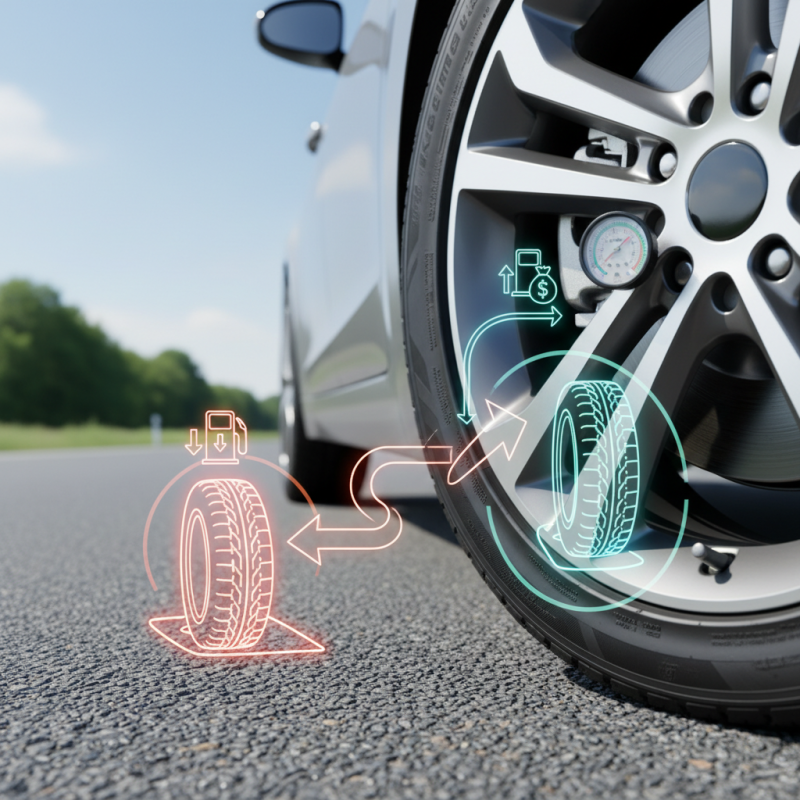
Understanding Tire Pressure and Fuel Economy
Maintaining proper tire pressure is crucial for optimal fuel economy. Under-inflated tires can increase rolling resistance. This can lead to lower fuel efficiency and higher emissions. Regularly checking tire pressure can help you avoid these issues. It’s recommended to check tire pressure monthly and before long trips.
Different vehicles have different pressure requirements. Often, this information is found on a sticker in the driver’s side door jamb. Driving with incorrect tire pressure can impact handling and increase tire wear. Over-inflation can also be harmful. It can reduce road grip, especially in wet conditions. Finding the right balance is necessary.
Many drivers overlook tire maintenance. Neglecting this can lead to unplanned expenses, like tire replacement. Yet, this is an easy fix that many ignore. Paying attention to tire pressure is a small task that pays off. It helps save fuel and improves safety. Consider adding it to your routine.
Maintaining the optimal tire pressure is crucial for fuel efficiency in all types of vehicles. According to a study by the U.S. Department of Energy, under-inflated tires can reduce fuel economy by approximately 0.4% for every 1 psi drop in pressure. Most vehicles have a recommended tire pressure that can typically be found in the owner’s manual or on a sticker inside the driver’s side door. This information varies significantly across vehicle types.
For sedans, the ideal tire pressure often ranges from 30 to 35 psi. Meanwhile, larger vehicles like SUVs and trucks tend to require slightly higher pressures—often between 35 to 40 psi. However, even within these ranges, it is crucial to consider factors such as load and driving conditions. For instance, carrying heavy loads can necessitate a higher tire pressure to maintain safety and efficiency. Regularly checking tire pressure, especially before long trips, is vital for optimal performance.
Many drivers overlook tire pressure, focusing instead on oil changes or air filter replacements. Yet, neglecting this simple task can lead to increased fuel costs. A survey by the National Highway Traffic Safety Administration found that nearly 33% of vehicles are driven with at least one under-inflated tire. This points to the need for more awareness among vehicle owners regarding simple maintenance. Balancing convenience with efficiency merits further attention.
| Vehicle Type | Optimal Tire Pressure (PSI) | Fuel Economy Improvement (%) | Recommended Tire Type |
|---|---|---|---|
| Compact Car | 32 | 10 | All-Season Tire |
| Sedan | 30 | 8 | Performance Tire |
| SUV | 35 | 6 | All-Terrain Tire |
| Truck | 40 | 5 | Mud-Terrain Tire |
Maintaining the correct tire pressure is vital for optimizing fuel economy. To measure tire pressure accurately, you need a reliable pressure gauge. Many gauges are available, including digital and analog models. They provide accurate readings, but be sure to check their calibration. This ensures reliable results every time.
Before measuring, make sure the tires are cold. This means they should not have been driven for at least three hours. Remove the valve cap and press the gauge onto the valve stem. The reading will show you the current pressure. If it’s lower than the recommended level, it's time to adjust. Use an air compressor to inflate the tire to the correct pressure. Remember, over-inflation can lead to reduced grip and uneven wear.
Pay attention to fluctuations in pressure with changes in temperature. Cold weather can lower tire pressure, while heat can increase it. Check your tires regularly, even if they appear fine. Tire pressure can impact safety and fuel efficiency significantly. Neglecting regular checks may lead to a false sense of security. Make it a habit to monitor your tire health. It's a simple practice that pays off in the long run.
Tire pressure plays a crucial role in fuel efficiency. Under-inflated tires can significantly reduce gas mileage. When tires lack air, they create more rolling resistance. This means the engine must work harder, leading to increased fuel consumption. Studies show that even a small drop in pressure can lead to noticeable decreases in efficiency.
On the other hand, over-inflated tires present their own issues. They can cause uneven tread wear and a harsher ride. The loss of traction can impact handling, especially in wet conditions. This may lead drivers to accelerate more, negating potential fuel savings. Proper tire maintenance requires regular checks to maintain optimal pressure, usually recommended between 30 to 35 psi.
Ignoring tire pressure can not only harm fuel economy but also vehicle safety. Many drivers often forget about this aspect until faced with issues. It's vital to adjust pressure according to weather changes. Being consistent with tire care can ultimately lead to better performance and savings at the pump. A little attention to detail goes a long way in keeping your vehicle efficient.
Tire pressure plays a crucial role in fuel economy. Maintaining the right pressure can lead to significant savings at the pump. The ideal pressure varies per vehicle, but keeping it within the recommended range is essential for safety and efficiency.
Regular checks are vital. Use a reliable gauge to measure your tire pressure at least once a month. Many drivers overlook this simple task. It’s easy to forget, yet essential. Under-inflated tires can increase fuel consumption by up to 3%. That adds up over time.
Consider the temperature changes. Cold weather can lower your tire pressure. Conversely, heat can raise it. Frequent fluctuations can impact your driving experience. When inspecting your tires, ensure the valve stems are intact. A damaged valve can lead to slow leaks. Also, remember to rotate your tires every 5,000 to 7,000 miles. This can promote even wear and extend tire life, making each ride safer and more economical.
Maintaining optimal tire pressure is crucial for achieving the best fuel economy in vehicles. The chart above illustrates the relationship between tire pressure conditions and average fuel economy measured in miles per gallon (MPG). As the data shows, having tires inflated to an ideal pressure range of 30-35 PSI can lead to the highest fuel economy.
: Proper tire pressure is crucial for fuel economy and reduces rolling resistance, improving efficiency.
It's best to check tire pressure monthly and before long trips for optimal safety and efficiency.
Incorrect pressure affects handling, increases tire wear, and can lead to unplanned expenses, like replacements.
Use a reliable pressure gauge. Ensure tires are cold and check calibration for accurate readings.
Adjust tire pressure if it’s lower than the recommended level after measuring with a gauge.
Cold weather decreases tire pressure, while heat increases it. Regular checks are essential in all seasons.
Over-inflation reduces road grip and causes uneven wear, impacting safety and performance negatively.
Tire maintenance often feels insignificant, but neglecting it can lead to safety issues and higher costs.
Regularly monitor and adjust tire pressure. It’s a small task that offers significant long-term benefits.
Yes, regular checks can significantly enhance safety and fuel efficiency, preventing potential hazards on the road.
In the quest for maximizing fuel economy, understanding tire pressure is crucial. What is the best tire pressure for fuel economy varies depending on the vehicle type, but maintaining optimal tire pressure is key to achieving better mileage. Generally, this involves keeping tire pressure within manufacturer-recommended guidelines tailored for different vehicles, which can be found in the owner’s manual or on the driver’s side door jamb.
To accurately measure and adjust tire pressure, using a reliable gauge is essential. Both under-inflation and over-inflation of tires can negatively impact fuel efficiency, leading to increased fuel consumption. Regular checks and adjustments, coupled with proper tire maintenance, help sustain adequate tire pressure, ultimately enhancing fuel economy and ensuring safer driving conditions.
