What Is the Best Tire Pressure for Fuel Economy? This question sounds simple, but the answer depends on your vehicle, tires, load, and driving conditions. The safest starting point is the pressure listed on the driver’s door-jamb label. It is not the maximum pressure printed on the tire sidewall.
John Nielsen, former AAA director of Automotive Engineering and Repair, has stated, “Proper tire inflation is one of the easiest ways to improve a vehicle’s fuel economy.” His advice reflects a practical truth. Underinflated tires create more rolling resistance, forcing the engine to work harder. That extra effort may appear small, but it accumulates during daily commutes, highway trips, and stop-and-go traffic.
Check the pressure when tires are cold. Morning is ideal. A reliable digital gauge can reveal a difference that a quick visual inspection misses. Even a few pounds below the recommended level can affect handling, tread wear, and fuel consumption. Do not overinflate tires to chase a slightly higher miles-per-gallon figure. Steering may feel sharper, but braking grip and ride comfort can suffer.
Real-world results vary. Weather, traffic, wheel alignment, and driving habits also influence fuel economy. I have found that drivers often check pressure only after a warning light appears. That is too late for ideal maintenance. The better habit is simple: inspect pressure monthly and before long journeys. There is no universal magic number. The best tire pressure for fuel economy is the manufacturer’s recommended cold pressure, maintained consistently and adjusted only when the vehicle maker advises it.
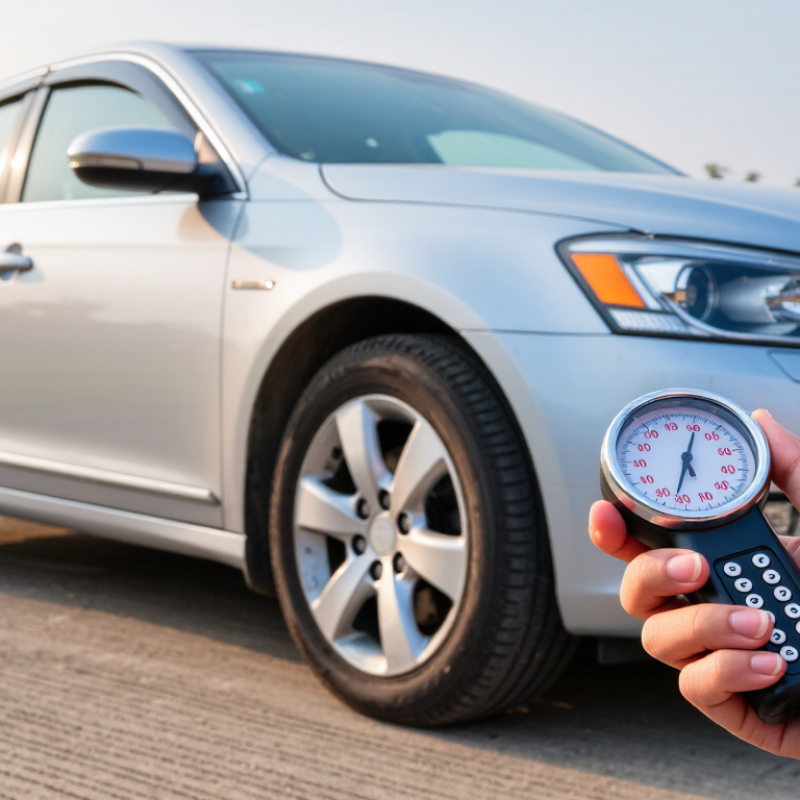
Understanding How Tire Pressure Affects Fuel Economy
What Is the Best Tire Pressure for Fuel Economy?
Understanding how tire pressure affects fuel economy begins with rolling resistance. A tire that is underinflated flexes more against the road. That extra movement creates heat and makes the engine work harder. Fuel use can rise, especially during city driving, where frequent acceleration adds more demand.
Use the pressure listed on the vehicle’s door-jamb label or owner’s manual. Do not use the maximum pressure printed on the tire sidewall as the normal setting. Check all four tires when they are cold, ideally before driving. A reliable gauge helps. Pressure changes with outside temperature, so a reading taken after a long trip may mislead you. Check the spare tire too.
The best pressure is not always the highest pressure. Overinflation may slightly reduce rolling resistance, but it can reduce grip, increase harshness, and cause uneven center wear. Underinflation can feel softer, yet it often wastes fuel and affects steering response. I have found that small pressure differences are easy to ignore during a busy week. That habit needs correction. Check pressure about once a month and before carrying heavy loads. Adjustments should follow the vehicle’s recommended load guidance, not guesswork. Even pressure across the axle matters, because uneven inflation can make the car pull and wear tires irregularly.
Checking and Adjusting Tire Pressure Correctly
For the best chance of improving fuel economy, start with the pressure listed on the driver’s door-jamb placard or in the owner’s manual. That figure is set for your vehicle and its standard tire size. The number molded into a tire’s sidewall is usually its maximum pressure, not the everyday target.
Check pressure when the tires are cold: ideally, the car has been parked for at least three hours. Remove the valve cap, press a reliable gauge squarely onto the valve, and note the reading. A faint hiss is normal, but a long one can affect the result. Compare each tire with the recommended figure, including the spare if you plan to use it. It is easy to rush this step.
If a tire is low, add air in short bursts, then measure again. If it is too high, release a little air and recheck. Don’t lower a warm tire to the cold-pressure target; driving heats the air inside and raises the reading. Check again in the morning. A dashboard warning can help, but it may not tell you the exact pressure or catch a gradual drop early. Recheck monthly and when seasons change, since colder weather can reduce pressure. I’d still verify with a gauge rather than assume the warning light covers everything.
| What Is the Best Tire Pressure for Fuel Economy? — Checking and Adjusting Tire Pressure Correctly |
| Situation |
Pressure Guidance |
Fuel-Economy Impact |
Correct Action |
| Everyday driving |
Use the cold tire pressure specified on the vehicle’s door-jamb placard or in its owner’s manual. |
The vehicle’s specified pressure is the appropriate baseline for balancing efficiency, handling, and tire wear. |
Check all tires regularly, including the spare if applicable. Front and rear recommendations may differ. |
| Pressure below the vehicle’s recommendation |
Inflate to the specified cold pressure; do not add extra pressure solely to improve fuel economy. |
Underinflation increases rolling resistance and can reduce fuel economy. The size of the effect varies with the vehicle, tires, and degree of underinflation. |
Use a reliable gauge and add air in small increments, checking again until the recommended pressure is reached. |
| Pressure at the recommended cold setting |
Match the placard or manual value when the tires are cold—typically before driving or after the vehicle has been parked for several hours. |
This is the correct target; raising pressure above the specified value is not a reliable way to improve efficiency. |
Recheck after major seasonal temperature changes and before long trips. |
| Warm tires after driving |
Readings can be higher than cold readings because tire pressure rises as tires warm up. |
A warm reading alone does not show that the tires are overinflated. |
Do not let air out of warm tires to match the cold-pressure recommendation. Recheck when the tires are cold. |
| Cold weather or a sudden temperature drop |
Pressure commonly decreases as air temperature falls; the actual change depends on conditions. |
Low pressure can increase rolling resistance and may affect handling and tire wear. |
Check pressure cold and inflate to the vehicle’s specified value. Do not use the tire sidewall’s maximum pressure as the target. |
| Warning light or repeated pressure loss |
A tire-pressure monitoring system warning means one or more tires may be underinflated; the system does not replace manual checks. |
Continuing to drive on an underinflated tire can compromise safety and efficiency. |
Check every tire with a gauge. If pressure keeps dropping, have the tire inspected for a puncture, leak, or other damage. |
Balancing Fuel Savings With Safety and Ride Comfort
The best tire pressure for fuel economy is usually the vehicle maker’s recommended cold pressure, listed on the driver-door placard or in the owner’s manual. Check it before driving, ideally after the car has been parked for several hours. The number printed on a tire’s sidewall is a maximum, not a target. Small detail, big difference. A handheld gauge can reveal pressure loss that may not be obvious by eye.
Underinflated tires flex more as they roll, creating extra resistance and using more fuel. But adding pressure beyond the recommended level is not a safe shortcut to better mileage. It can make the ride harsher, reduce grip on uneven roads, and contribute to uneven tread wear. That trade-off is easy to overlook when the pavement feels smooth. Check pressure monthly and before long trips, since cold mornings can lower readings. If a tire is warm from driving, wait or follow the gauge instructions rather than releasing air to match a cold-pressure figure.
Fuel savings also depend on driving speed, traffic, load, and tire condition, so pressure alone will not transform consumption. I’ve found that a slow leak can be more revealing than a single reading: if one tire repeatedly drops, have it inspected instead of topping it up indefinitely. Temperature changes complicate things, and I sometimes forget to recheck after a sharp weather shift. A brief routine beats guessing.
Maintaining Optimal Tire Pressure in Changing Conditions
What Is the Best Tire Pressure for Fuel Economy?
Maintaining Optimal Tire Pressure in Changing Conditions
The best tire pressure for fuel economy is usually the cold pressure listed on the vehicle’s door-jamb label. It is not the maximum number printed on the tire sidewall. That distinction matters. A properly inflated tire rolls with less resistance, helping the engine use less fuel during daily driving.
Temperature changes can alter pressure noticeably. Pressure may drop about 1 psi for every 10°F decrease in temperature. Check all four tires before driving, preferably after the vehicle sits overnight. A cold morning reading is more useful than a measurement after a long highway trip. Warm tires naturally show higher pressure.
I once checked pressure only when the dashboard warning appeared. That habit was wrong. The warning system may alert you after pressure has already fallen significantly. Now, I use a reliable gauge every few weeks and before long trips. I also check after sudden weather changes, such as a cold front or a sharp spring warm-up. Carrying passengers or heavy cargo can affect handling, so follow the vehicle manual for loaded conditions. Do not release air from warm tires just to match the cold specification. Uneven pressure still deserves attention. One tire sitting three psi lower can make the car pull slightly and wear its edges faster.
Tire Pressure and Fuel Economy
Illustrative fuel economy relative to the vehicle’s recommended cold tire pressure. Underinflation can reduce fuel economy; use the pressure listed on the vehicle’s door-jamb placard, not the tire sidewall.
Illustrative comparison: each 1 psi below the recommended pressure is modeled as approximately 0.2% lower fuel economy. Actual results vary by vehicle and driving conditions.
Conclusion
What is the best tire pressure for fuel economy? In most cases, it is the pressure recommended by the vehicle manufacturer, not the maximum pressure printed on the tire sidewall. Proper inflation helps reduce rolling resistance, allowing the engine to use less fuel while supporting stable handling and even tread wear. Drivers should find the recommended pressure in the vehicle information label or owner’s manual and check all tires, including the spare when applicable.
Tire pressure should be measured with a reliable gauge when the tires are cold, then adjusted as needed. Overinflation may improve efficiency slightly but can reduce ride comfort, traction, and braking performance, while underinflation increases resistance, heat, and wear. Temperature changes, heavy loads, and long trips can also affect pressure, so regular inspections are important. Maintaining the manufacturer’s recommended level offers the best balance of fuel savings, safety, comfort, and tire life.
 C-Max Tire
